
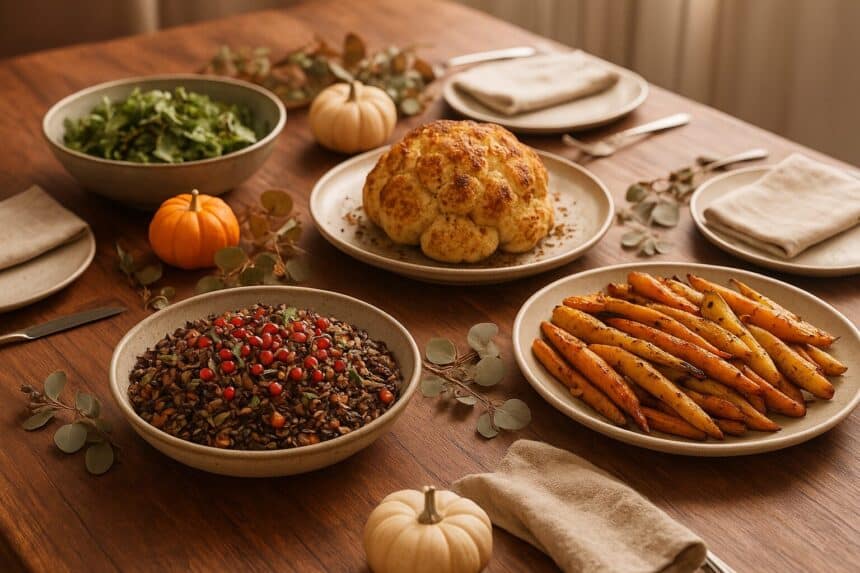
Planning a Wholesome Friendsgiving Feast
Hosting a large group for Friendsgiving requires a thoughtful balance between indulgent traditional flavors and vibrant, plant-based nourishment. When cooking for a crowd, the key to a successful evening is prioritizing dishes that allow for advance preparation, ensuring you spend more time with your guests than at the stove. By focusing on seasonal produce and communal-style serving, you can create a Friendsgiving party with a healthy twist that feels both abundant and grounded in wellness.
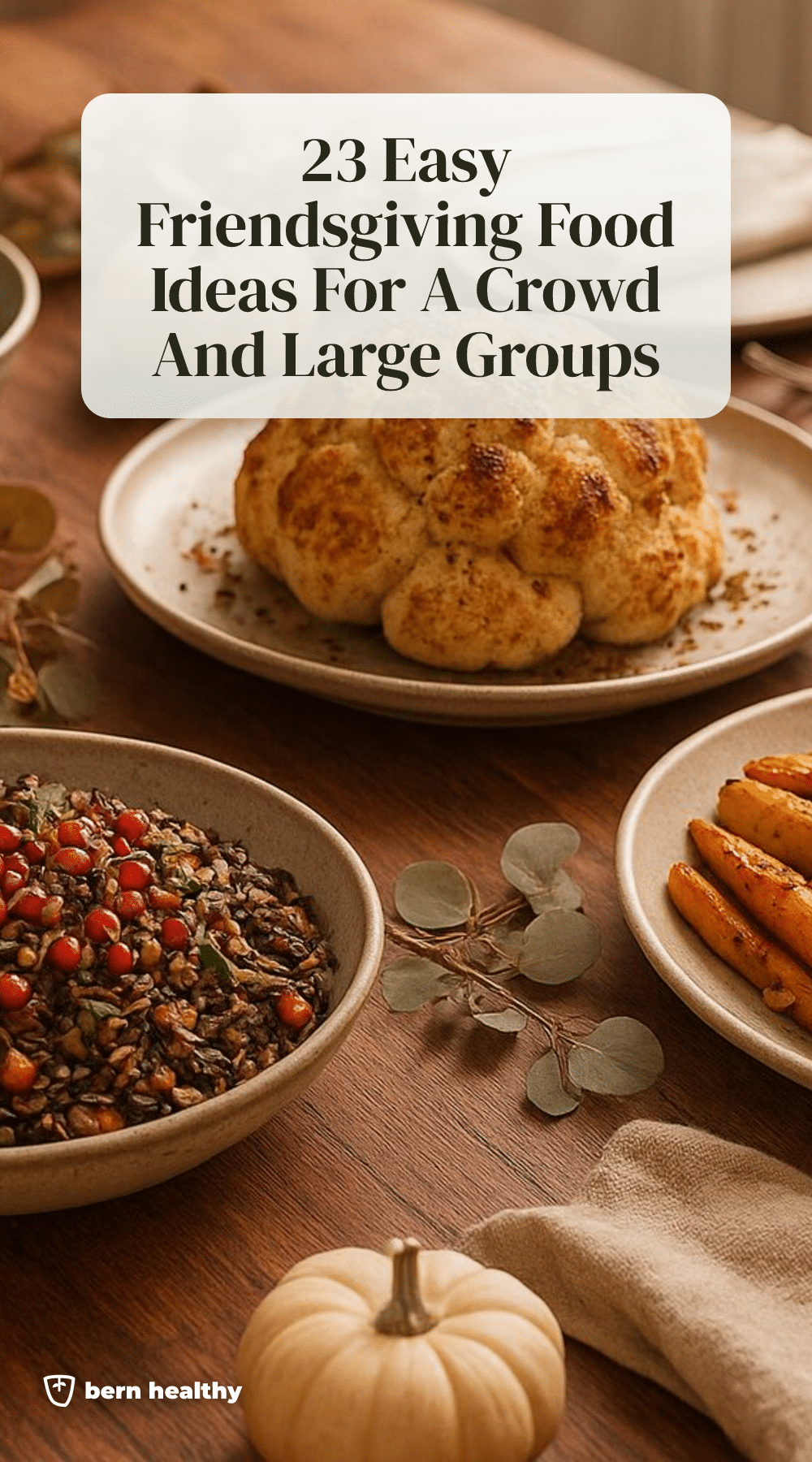
Crowd-Pleasing Appetizers and Starters
Starting the meal with nutrient-dense appetizers keeps guests satisfied while the main course finishes. These bites focus on high-fiber vegetables and healthy fats to provide steady energy throughout the celebration.
1. Roasted Garlic Hummus with Root Veggie Chips
This fiber-rich dip swaps store-bought crackers for thinly sliced, baked beets, parsnips, and sweet potatoes. The roasted garlic adds a deep, mellow flavor that aids digestion more gently than raw cloves. For the best crunch, slice your root vegetables very thinly with a mandoline and bake at a low temperature until the edges begin to curl and crisp.
2. Cranberry and Brie Crostini
A classic pairing that balances the tartness of antioxidant-rich cranberries with the creamy texture of brie. Use a whole-grain baguette to add more complex carbohydrates to the spread. To save time, simmer the cranberry topping with a splash of orange juice and a cinnamon stick the day before the party.
3. Stuffed Mini Peppers
These colorful, bite-sized peppers are a nutrient-dense alternative to heavier appetizers. Fill them with a mixture of herbed goat cheese or a plant-based cashew cream for a lighter touch. To keep them upright on a serving platter, slice a tiny sliver off the bottom of each pepper to create a flat base.
4. Spiced Nut Mix
A high-protein grazing option that is easy to scale for twenty people or more. Toss walnuts, pecans, and almonds with maple syrup and fresh rosemary before roasting in the oven until fragrant. The rosemary provides a fragrant, savory counterpoint to the natural sweetness of the maple.
5. Sweet Potato Rounds with Goat Cheese
For a gluten-free starter, use thick slices of roasted sweet potato as the base. Top each round with a crumble of goat cheese and a single pomegranate seed for a festive look. Ensure the rounds are roasted until tender but firm enough to hold, checking for a golden-brown underside before removing them from the heat.
6. Spinach and Artichoke White Bean Dip
This version of the classic dip uses pureed cannellini beans instead of heavy cream or excessive mayonnaise to achieve a velvety texture. It provides a significant protein and fiber boost while remaining incredibly dip-able. Serve it warm in a cast-iron skillet to maintain its temperature on a busy buffet table.
Hearty Main Dishes and Protein Alternatives
Main courses for large groups should be efficient to cook and easy to carve. These selections offer variety for different dietary preferences, ensuring every guest has a protein-rich centerpiece.
7. Herb-Roasted Spatchcocked Turkey
Spatchcocking, or removing the backbone to flatten the bird, is the most efficient way to cook a whole turkey for a crowd. This method reduces cooking time significantly and ensures the breast and thighs reach their target temperatures simultaneously. Rub the skin with a blend of sage, thyme, and softened butter for a crisp, aromatic finish.
8. Lentil and Mushroom Loaf
A savory, plant-based centerpiece that satisfies vegetarian guests with its earthy, umami profile. Combining cooked brown lentils with finely diced sautéed mushrooms creates a texture similar to traditional meatloaf. Press the mixture firmly into a parchment-lined tin to ensure it holds its shape when sliced into thick, hearty portions.
9. Slow Cooker Turkey Breast
Using a slow cooker for a secondary turkey breast frees up valuable oven space for side dishes. This method keeps the meat exceptionally moist, as it gently steams in its own juices and aromatics like celery and onion. Set the cooker on a low setting until the meat reaches a tender, shred-able consistency perfect for sandwiches or gravy.
10. Salmon with Maple-Glaze and Pecans
Salmon offers a lighter, omega-3-rich protein option that cooks quickly in the oven. A simple glaze of maple syrup and Dijon mustard creates a caramelized crust that pairs beautifully with the crunch of toasted pecans. Use a large sheet pan to cook several fillets at once, ensuring they are all roughly the same thickness for even results.
11. Pumpkin and Sage Pasta Bake
This comforting, large-format dish can feed a dozen people with minimal effort. Use a pureed pumpkin and vegetable broth base for the sauce to keep it creamy without relying solely on heavy dairy. Choose a sturdy pasta shape like rigatoni or penne that can stand up to the thick sauce and a final pass under the broiler.
Nutritious and Vibrant Side Dishes
Side dishes often steal the show at Friendsgiving. By focusing on whole grains, fermented breads, and colorful vegetables, you can offer food ideas for wellness lovers that complement the heavier mains.
12. Maple-Roasted Brussels Sprouts with Pomegranate
Adding pomegranate seeds provides a burst of color and antioxidants to the earthy flavor of charred sprouts. Roast the sprouts at a high temperature to achieve those crispy, caramelized outer leaves. Toss the pomegranate seeds on just before serving to maintain their bright, juicy texture.
13. Wild Rice Pilaf with Dried Apricots
Wild rice is a hearty, naturally gluten-free grain that adds a chewy texture to the plate. The addition of chopped dried apricots provides a subtle sweetness that pairs well with poultry. Cook the rice in vegetable stock instead of water to infuse every grain with savory depth.
14. Honey-Glazed Rainbow Carrots
Utilizing rainbow carrots makes for a visually stunning side dish that requires very little garnish. A light glaze of honey and a sprinkle of sea salt highlights the natural sugars of the roots. Roast them whole with a bit of the green tops still attached for a rustic, farm-to-table presentation.
15. Massaged Kale Salad with Toasted Walnuts
Kale is the ideal green for a buffet because it does not wilt quickly under dressings. Rubbing the leaves with olive oil and lemon juice for a few minutes breaks down the tough fibers, making it tender and easier to digest. Add toasted walnuts just before the guests arrive to keep the crunch intact.
16. Garlic Mash with Cauliflower
This lower-carb twist on traditional mashed potatoes replaces half the spuds with steamed cauliflower. When pureed together, the cauliflower adds a lightness and a subtle nutty flavor that perfectly carries the roasted garlic. Use a food processor for an ultra-smooth consistency that mimics classic mash perfectly.
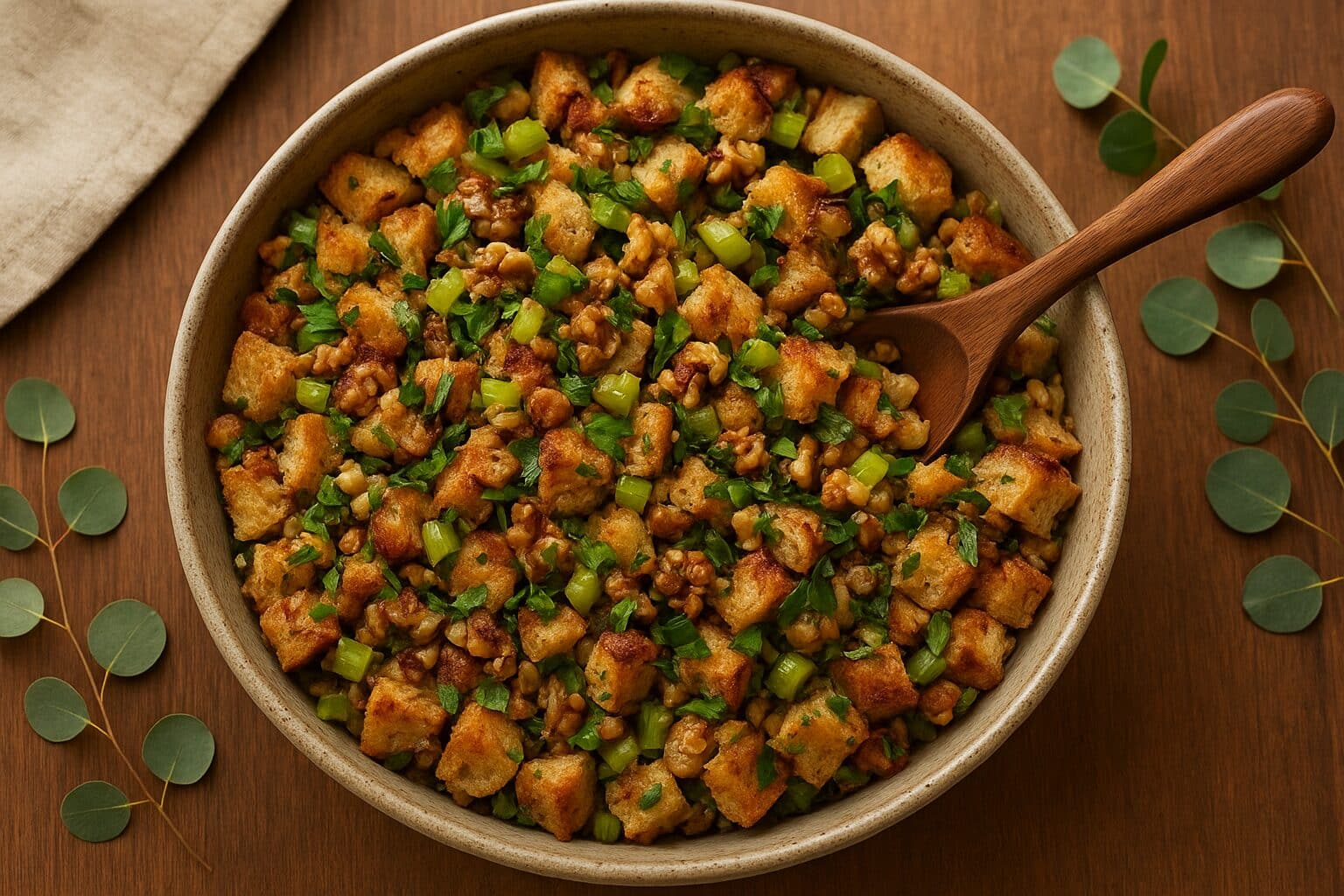
17. Sourdough Herb Stuffing
Using fermented sourdough bread can make stuffing easier on the digestive system compared to standard white bread. The natural acidity of the sourdough provides a complex flavor that stands up well to heavy doses of fresh rosemary and thyme. Dry your bread cubes in the oven until they are crisp before mixing with broth to prevent a soggy texture.
Naturally Sweet Desserts and Beverages
End the night with treats that emphasize fruit, warm spices, and natural sweeteners. These options provide a satisfying finish without the heavy sugar crash often associated with holiday desserts.
18. Crustless Pumpkin Pie Custards
By removing the crust, you focus on the nutrient-dense pumpkin and reduce the amount of refined flour in the meal. These individual ramekins are easy to serve to a crowd without the mess of slicing. Bake them in a water bath to ensure the custard remains silky and does not crack on top.
19. Baked Apples with Cinnamon and Oats
A warm, fiber-rich dessert that fills the whole house with the scent of the season. Core the apples and fill the centers with a mixture of rolled oats, cinnamon, and a touch of coconut oil. They are ready when the skins just begin to wrinkle and the centers are soft enough to yield to a spoon.
20. Dark Chocolate Dipped Pears
This is an elegant way to serve seasonal fruit with minimal preparation. Use dark chocolate with at least 70% cocoa for a richer flavor and less sugar. Dip only half of each pear slice to showcase the fruit's natural beauty and provide a clean place for guests to hold them.
21. Hot Mulled Apple Cider
Infusing cider with star anise, cinnamon sticks, and cloves creates a beverage that supports digestion after a large meal. Keep the cider on a low simmer in a slow cooker so guests can serve themselves throughout the evening. Add sliced oranges to the pot to contribute a bright, citrusy note and vitamin C.
22. Cranberry Sparklers with Rosemary
A refreshing non-alcoholic option that feels sophisticated and festive. Combine unsweetened cranberry juice with sparkling water and a sprig of fresh rosemary for an aromatic twist. The rosemary acts as a stirrer, subtly infusing the drink with its piney, herbal essence.
23. Poached Pears in Hibiscus Tea
Hibiscus tea gives poached pears a stunning deep red hue and a tart, floral flavor. This dessert doubles as a digestive aid and is naturally caffeine-free for late-night enjoyment. Simmer the pears until they are translucent and tender, then reduce the poaching liquid into a thick syrup to drizzle over the top.
Frequently Asked Questions
How can I keep food warm for a large group without a warming drawer?
Utilize insulated coolers as 'hot boxes' by lining them with towels to trap heat for side dishes. Slow cookers on the 'warm' setting are perfect for dips, mashed vegetables, and even stuffing. For sheet pan items, a low oven setting can keep things warm for a short period; cover them with foil to prevent moisture loss.
What are the best Friendsgiving dishes to make 24 hours in advance?
Dips like the white bean artichoke or hummus actually improve in flavor after sitting overnight. You can also prep the wild rice pilaf, cranberry sauce, and the pumpkin custard bases a full day ahead. Kale salads are unique because they can be dressed a few hours early without losing their structure, unlike delicate lettuce-based salads.
How do I estimate food quantities for a group of 15 to 20 people?
A general guideline is to plan for a substantial portion of the main protein per person to account for bones and leftovers. For sides, aim for a small scoop of each dish per guest. If you are serving a wide variety of 23 different items, guests will likely take smaller portions of each, so you can adjust quantities downward to avoid excessive waste.
What are some easy ways to accommodate multiple dietary restrictions at once?
The most efficient strategy is to keep components separate when possible—for example, serving cheese or nuts in small bowls next to a salad rather than mixed in. Focus on naturally gluten-free grains like wild rice and use olive oil or coconut oil instead of butter for roasting vegetables to ensure many dishes are both vegan and gluten-friendly by default.
This article is general information, not medical advice. Talk to your doctor or another qualified health professional about your own situation, especially before changing medication, diet or exercise.


