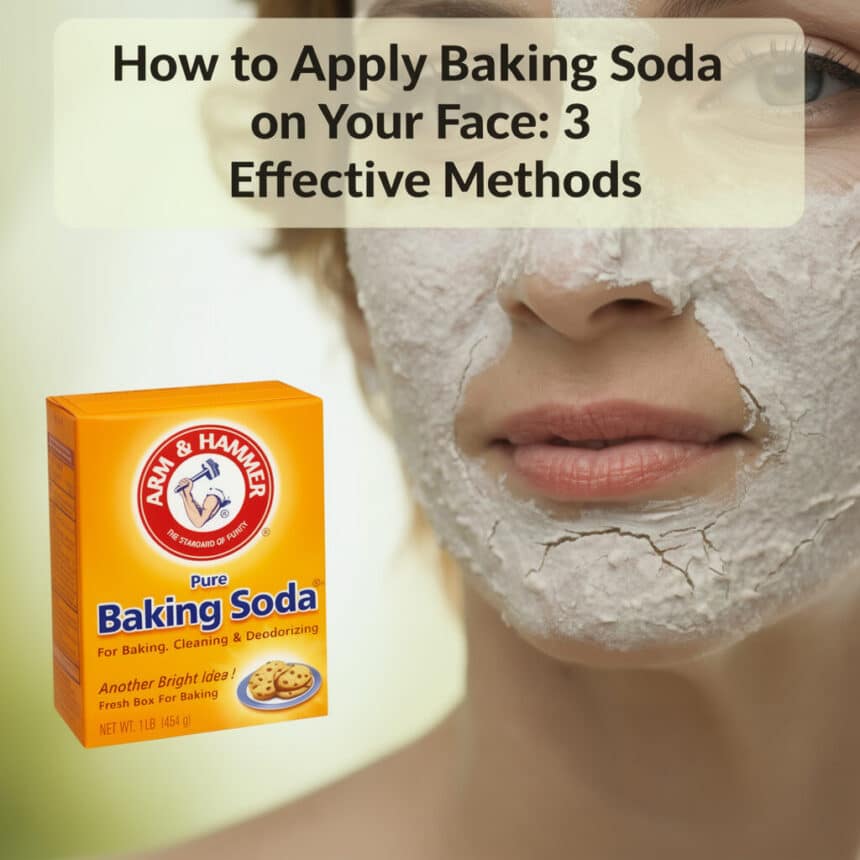
Baking soda is a familiar kitchen powder, and some people also use it as a homemade face mask. You may have seen a thick white paste covering the cheeks, chin, and forehead while the lips stay clear. That look is popular online, but baking soda is alkaline and slightly abrasive. A careful, short application can leave some skin feeling smoother. A thick, cracked layer left too long can dry and irritate.
If you want to try it, you need a clear method, a modest time limit, and an honest sense of who should skip it. The goal is a brighter, cleaner feel—not a medical fix.
What This Topic Is and Why It Matters
Baking soda is sodium bicarbonate. People mix it with water or honey to make a paste that lightly buffs away surface oil and dull cells. It is inexpensive and already in many homes, which is why it shows up in so many DIY routines.
It matters because the same properties that make it useful in cleaning can be harsh on facial skin. Skin’s surface is slightly acidic. Frequent alkaline pastes can weaken that barrier and leave tightness or redness. Learning how to apply baking soda—and when not to—helps you avoid trading a glow for irritation.
Main Wellness Benefits
Used occasionally, baking soda may support a few cosmetic effects:
- Gentle physical exfoliation that can make skin feel smoother after rinsing
- Temporary oil control on oily areas for some people
- A clean, refreshed feel without buying a special mask
- Low cost and easy access compared with many store products
These are not guaranteed results and not treatments for acne, scars, or pigment. If you have a skin condition, this is general wellness information, not a substitute for professional care.
3 Practical Methods to Apply Baking Soda
Wash your face first. Keep paste away from eyes, lips, and any broken skin. Aim for a thin, even layer rather than a heavy mask that dries and cracks.
Method 1: Simple Water Paste
Stir one teaspoon of baking soda with a few drops of lukewarm water until creamy. Spread a thin coat on the T-zone, cheeks, and chin. Leave it on for five minutes at most. Rinse with lukewarm water, pat dry, and moisturize. If you sting or burn, rinse right away.
Method 2: Cleanser Mix
Wet your face. Add a pinch of baking soda to a pea-size amount of mild cleanser. Massage gently for about 20 seconds. Do not scrub. Rinse well. Limit this to once a week if your skin stays comfortable.
Method 3: Honey Paste
Mix equal parts baking soda and honey, about one teaspoon each. Honey adds slip and can feel less drying than water alone. Apply thinly for five minutes, rinse thoroughly so no stickiness remains, then moisturize.
Do not use any of these methods every day. Once weekly or less is enough for most people who tolerate it.
Important Considerations
Skip baking soda if you have dry, sensitive, or reactive skin, rosacea, eczema, or open blemishes. Do not put it on sunburn or freshly shaved skin. Do not replace prescribed treatments with a kitchen paste.
Do a patch test: a small mix on the inner arm for 24 hours. Itching or redness means do not use it on your face. Pregnant people and anyone with a chronic skin issue should ask a clinician before trying alkaline DIY products.
Photos of a fully coated, cracked face are not a how-to. Longer drying time raises the chance of tightness and micro-irritation.
Useful Tips
- Choose plain food-grade baking soda.
- Keep the paste wet enough so it is not sandy.
- Avoid pairing it with lemon, vinegar, or strong acids the same day.
- Always follow with a bland moisturizer.
- Stop at the first sign of burning or unusual redness.
Frequently Asked Questions
Can baking soda clear acne?
No. It is not an acne medicine. It may reduce surface oil for a short time, but it can also inflame spots. See a professional for ongoing breakouts.
How often is safe?
If your skin stays calm, once a week or less. Daily use is too much for most faces.
Can I put it near my mouth or eyes?
No. Keep it off lips, eyes, and nostrils. Rinse at once if it gets in the eyes.
Will it make my skin glow overnight?
Any brighter look usually comes from light exfoliation. There is no reliable overnight transformation.
Conclusion
Baking soda can be a simple, occasional option for people whose skin handles light exfoliation well. The three methods—water paste, cleanser mix, and honey paste—work best in a thin layer, for a few minutes, followed by moisturizer. Protect your barrier, skip it if you are sensitive, and get medical guidance when a condition or prescription is involved. A pantry staple can support a fresh look; it should never replace thoughtful skin care.