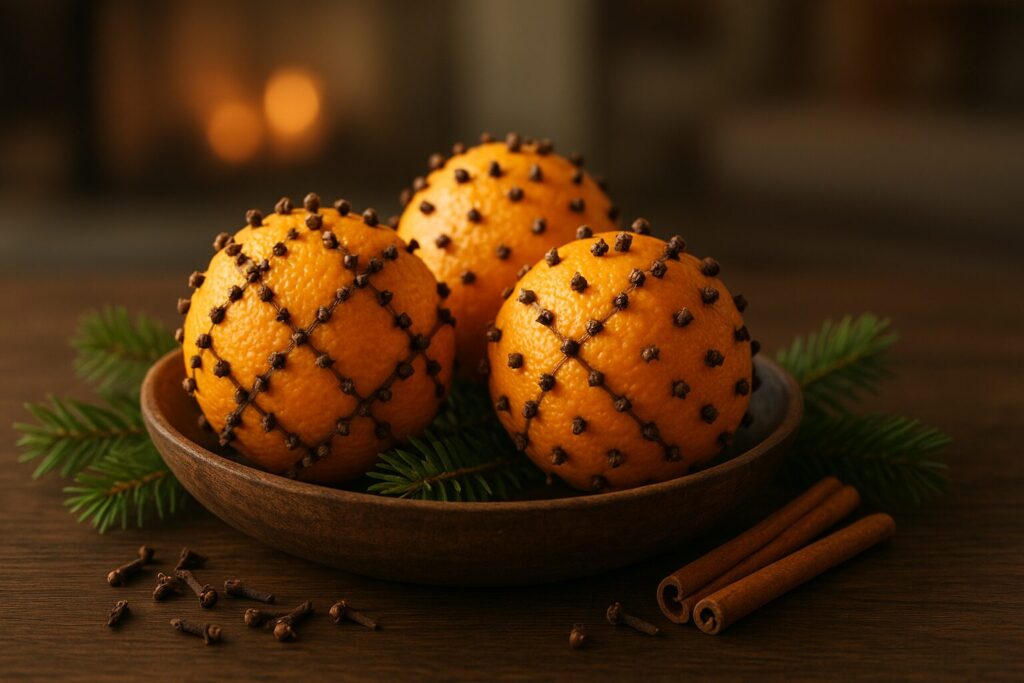
The Tradition of Orange and Clove Pomanders
Orange pomander balls represent a beautiful bridge between festive aesthetics and natural aromatherapy. Historically, the 'pomme d’ambre' was used to scent spaces naturally, long before synthetic room sprays existed. In the context of a modern wellness-focused home, these clove-studded fruits offer a way to celebrate the holidays without relying on chemical fragrances. By combining the bright, citrusy notes of fresh oranges with the deep, spicy warmth of whole cloves, you create a sensory experience that grounds the home environment. This traditional craft is not just about decoration; it is a mindful seasonal ritual that invites a sense of calm and nostalgia into your living space.
Engaging in these hands-on activities can be particularly beneficial for family dynamics during the busy season. Creating natural decor can serve as one of many Christmas mental health activities for kids, helping them focus on a tactile, rewarding task that slows down the holiday rush. The slow, rhythmic process of piercing the fruit and placing the spices encourages a meditative state, making it a perfect evening activity when the weather turns cold and the household seeks a quiet, productive outlet.
Selecting the Best Natural Materials for Scent and Longevity
Creating a long-lasting pomander starts with choosing the right fruit. Look for oranges that are firm to the touch and have relatively thin skins, such as clementines, tangerines, or small navel oranges. Thin-skinned varieties are much easier to pierce and tend to dry more uniformly, reducing the risk of internal spoilage. Avoid fruits with soft spots or bruised peels, as these are more likely to develop mold before the curing process is complete. If you are a gardener, you might even consider how these fruits complement the best medicinal herbs for beginners you may already be growing, as many aromatic herbs like rosemary pair beautifully with citrus.
The quality of your spices is equally important. When sourcing cloves, look for whole pieces where the rounded flower head is still intact. High-quality cloves are rich in essential oils, which provide the characteristic fragrance and act as a natural preservative. To add complexity to your natural decor, consider gathering other botanicals to display alongside your pomanders:
- Cinnamon sticks for a woody, sweet aroma that lingers for weeks.
- Star anise for a visual contrast and licorice-like scent, often used in potpourri.
- Dried bay leaves or cedar sprigs for a touch of forest green and a crisp, resinous undertone.
- Whole nutmeg or dried ginger slices to add a sharper, earthy spice profile to the arrangement.
Using fresh cloves ensures the scent remains potent throughout the month of December. The oils in the cloves interact with the citric acid in the orange, creating a natural preservative effect that helps the fruit dry out rather than rot.
Step-by-Step Guide to Crafting Studded Pomander Balls
Before you begin inserting cloves, it is helpful to plan your design. You can use small rubber bands or masking tape as a guide to create straight lines, geometric grids, or even swirling patterns. If you intend to hang the pomander with a ribbon later, leave a clear path of bare skin where the ribbon will sit. This prevents the cloves from snagging the fabric and ensures the ornament hangs straight.
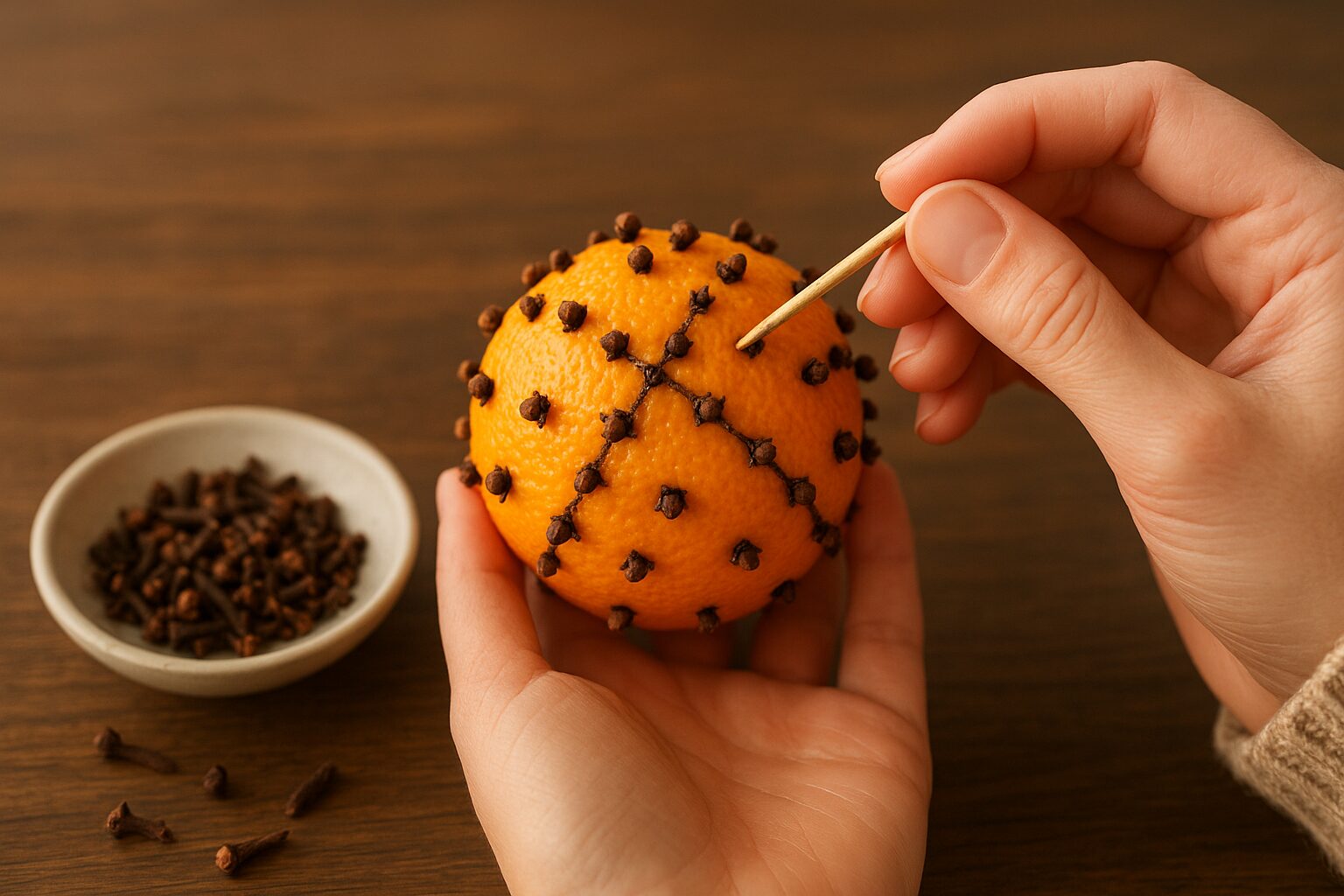
The Piercing Technique
One common mistake is trying to push the clove directly into the orange skin. This often results in broken clove heads and sore fingers. Instead, use a wooden toothpick, a small metal skewer, or a clean upholstery needle to pre-pierce the skin. Insert the tool just deep enough to break the zest, then gently press the clove stem into the hole. This preserves the delicate clove head and makes the process much more enjoyable. For more detailed tips on handling the spices, you can explore practical ways to use whole cloves in your daily wellness routine.
Spacing for Shrinkage
As the orange dries, it will naturally shrink. If you place the cloves too close together while the fruit is fresh, they may begin to overlap or fall out as the skin tightens. Leave a small amount of space—roughly the width of a clove head—between each insertion to allow the fruit to contract gracefully. This ensures your patterns remain clear and the structure stays intact during the curing phase. If you cover the entire surface, the orange will become a hard, spice-covered ball that can last for years; if you leave patterns, the orange skin will darken and take on a rustic, leathery texture.
Curing and Preserving Your Natural Decor
A pomander that is simply left on a counter may rot before it dries. To preserve your creation, you must facilitate a proper curing process. Many traditional methods involve rolling the finished orange in a mixture of ground spices. Ground cinnamon, ginger, and nutmeg are popular, but orris root powder is the traditional choice as a fixative; it helps draw out moisture and lock in the fragrance. Simply place your studded orange in a bowl with the spice powder and turn it until it is lightly coated.
For the initial drying phase, place the pomanders in a cool, dark, and well-ventilated area. A paper bag kept in a pantry or a wire rack in a dry room works well. Avoid humid areas like the kitchen or bathroom. You will know the pomander is fully cured when it feels significantly lighter in weight and produces a hollow, woody sound when tapped. This process can take several weeks depending on the humidity in your home. Once cured, these ornaments can last for several seasons if kept away from moisture and stored in a breathable container during the off-season. For those who enjoy the scent of citrus in other ways, learning how to make cranberry sauce with frozen cranberries and orange juice can bring those same bright aromas into your holiday kitchen.
Wellness Benefits of Citrus and Clove Aromatherapy
The fragrance of a pomander ball offers more than just holiday cheer; it taps into the principles of natural home wellness. Citrus scents are widely regarded for their uplifting and invigorating properties, which can be particularly helpful during the shorter, darker days of winter. The bright aroma of orange zest provides a gentle mental boost, helping to support a positive seasonal mood. This is a simple way to practice environmental wellness, ensuring the air you breathe is filled with plant-derived compounds rather than synthetic chemicals.
Complementing the citrus is the warm, grounding quality of clove. Clove oil contains eugenol, which is a staple in traditional wellness for its comforting and purifying characteristics. Together, these scents create an environment that feels both clean and cozy. Using these botanical decorations is an excellent alternative to synthetic paraffin candles or aerosol room sprays, which can introduce artificial particulates into your home. For those interested in oranges and cloves for natural home wellness, these pomanders serve as a functional piece of aromatherapy decor that works continuously without the need for electricity or a flame.
Creative Ways to Display Pomanders Throughout the Home
Once your pomanders are crafted, there are many ways to integrate them into your holiday styling. For a rustic centerpiece, arrange several pomander balls in a large wooden bowl. Interspersed with fresh evergreen sprigs, pinecones, and a few walnuts, they create a classic look that smells divine. This arrangement works beautifully on a dining table or an entryway console, greeting guests with a natural spicy fragrance as they enter. You can also place them in baskets alongside other wellness items, similar to the concepts found in healthy gift baskets for Christmas.
If you prefer a more vertical display, you can wrap the cured oranges in thin velvet or twine ribbons and hang them as biodegradable ornaments on your Christmas tree. They also make wonderful additions to window sills where the sun can gently warm them, releasing more scent. If an older pomander begins to lose its potency after a year, you do not necessarily have to throw it away. You can briefly simmer it in a pot of water on the stove with a few cinnamon sticks to release the remaining essential oils into the air as a natural room refresher. This "simmer pot" method is a great way to squeeze the last bit of life out of your natural decorations before composting them.
Safety Considerations and Pet Precautions
While pomanders are natural, there are a few safety tips to keep in mind. If you have sensitive skin, the concentrated oils released from the orange zest during the piercing process may cause mild irritation or redness. Washing your hands thoroughly after crafting or wearing light gloves can prevent this. Furthermore, always monitor your pomanders for signs of mold, especially during the first week. If you see fuzzy white or green patches, the fruit has likely retained too much moisture and should be discarded immediately to avoid releasing spores into the air.
Pet safety is also a priority. Whole cloves and concentrated citrus oils can be irritating or even toxic to cats and dogs if ingested. Cats, in particular, are sensitive to citrus scents and may find them overwhelming. Ensure your pomanders are displayed out of reach of curious pets who might be tempted to bat at or chew on the ornaments. If you are crafting with children, provide supervision to ensure they use the piercing tools safely and do not rub their eyes after handling the spices and citrus peels, as the oils can cause significant stinging. If any accidental ingestion occurs or if a pet shows signs of distress like drooling or lethargy, consult a veterinarian immediately.
Frequently Asked Questions
How long do fresh orange pomanders typically last?
A fresh pomander stays vibrant for a few days if left at room temperature in a humid environment. To keep it fresh longer, you can place it in the refrigerator at night. However, if you follow the full curing process by coating it in spices and allowing it to dry completely in a well-ventilated area, it can harden and last for several years.
Can I use other citrus fruits like lemons or limes?
Yes, you can certainly use lemons, limes, or even grapefruits. Lemons offer a sharper, cleaner scent, while limes provide a zesty, tropical undertone. Keep in mind that limes have thinner skins and may dry faster, while grapefruits are much larger and will require significantly more cloves and a much longer drying time to prevent internal rot.
What should I do if my pomander starts to grow mold?
If you spot mold, it means the fruit is not drying fast enough or the environment is too humid. Unfortunately, once mold takes hold, it is best to discard the pomander to prevent spores from spreading. To prevent this next time, ensure the orange is heavily studded with cloves—which contain natural antimicrobial properties—and kept in a dry, airy spot away from kitchen steam.
How can I revive the scent of an older pomander ball?
If a cured pomander loses its punch, you can gently refresh it by adding a drop of clove or orange essential oil to the surface. Alternatively, place it in a sealed container with a tablespoon of ground cinnamon or cloves for a few days to let it absorb the spicy aroma once again, or use it in a holiday simmer pot.
Are these safe to make with children?
Making pomanders is a wonderful family activity. To keep it safe for children, have an adult pre-pierce the holes using a toothpick so the kids only have to push the cloves in. This protects their small fingers and makes the task easier for them to finish, though they should still be reminded to wash their hands and not touch their eyes while working.
Source and attribution: www.pinterest.com

Leave a Reply