
Crabgrass or Sedge Grass? Understanding Cyperus Rotundus
When you hear “crabgrass,” you might immediately think of a garden nuisance. However, the plant often associated with various health benefits, particularly in traditional practices, is more accurately identified as Cyperus rotundus, commonly known as sedge grass, nutsedge, or purple nutsedge. While it shares the “weed” reputation with crabgrass, it’s a distinct species with a long history of use in herbal medicine across different cultures.
This article delves into the potential topical applications of Cyperus rotundus, exploring how this resilient plant, often found in backyards and fields, might offer surprising wellness advantages for skin and hair. From soothing irritated skin to potentially promoting hair vitality, sedge grass is gaining attention for its natural properties.
The Historical and Modern Use of Sedge Grass
For centuries, various traditional medicine systems, including Ayurveda and traditional Chinese medicine, have utilized Cyperus rotundus for its diverse properties. While much of its historical use has been internal, modern interest is growing in its external applications. The plant’s rhizomes (underground stems) and leaves are particularly rich in bioactive compounds.
Visually, sedge grass can be identified by its distinctive triangular stems and grass-like leaves, often forming dense clumps. It’s a hardy plant, explaining its prevalence and, perhaps, its resilience in delivering potential benefits.
Potential Topical Benefits of Cyperus Rotundus
While research specifically on the topical application of sedge grass is still emerging, traditional uses and preliminary studies on its components suggest several potential advantages:
- Anti-inflammatory Properties: Sedge grass contains compounds that may help reduce inflammation. When applied topically, this could potentially soothe irritated skin conditions, minor rashes, or insect bites.
- Antimicrobial Effects: Some studies indicate that extracts from Cyperus rotundus possess antimicrobial and antifungal properties. This could make it useful for maintaining healthy skin by combating certain surface bacteria or fungi.
- Antioxidant Activity: Like many plants, sedge grass is a source of antioxidants. These compounds help protect skin cells from damage caused by free radicals, which can contribute to premature aging and skin issues.
- Skin Tone and Brightness: In some traditional practices, sedge grass has been used to improve skin complexion and reduce the appearance of blemishes or uneven skin tone. Its potential to reduce inflammation might play a role here.
- Hair Health Support: As seen in the provided image, sedge grass liquid is sometimes applied to hair. While direct scientific evidence is limited, traditional uses suggest it may help nourish the scalp, promote hair strength, and potentially address issues like dandruff due to its antimicrobial properties.
- Wound Healing: Historically, some cultures have used sedge grass for minor cuts and wounds, attributing to it properties that aid in the healing process.
How to Prepare and Use Sedge Grass Topically
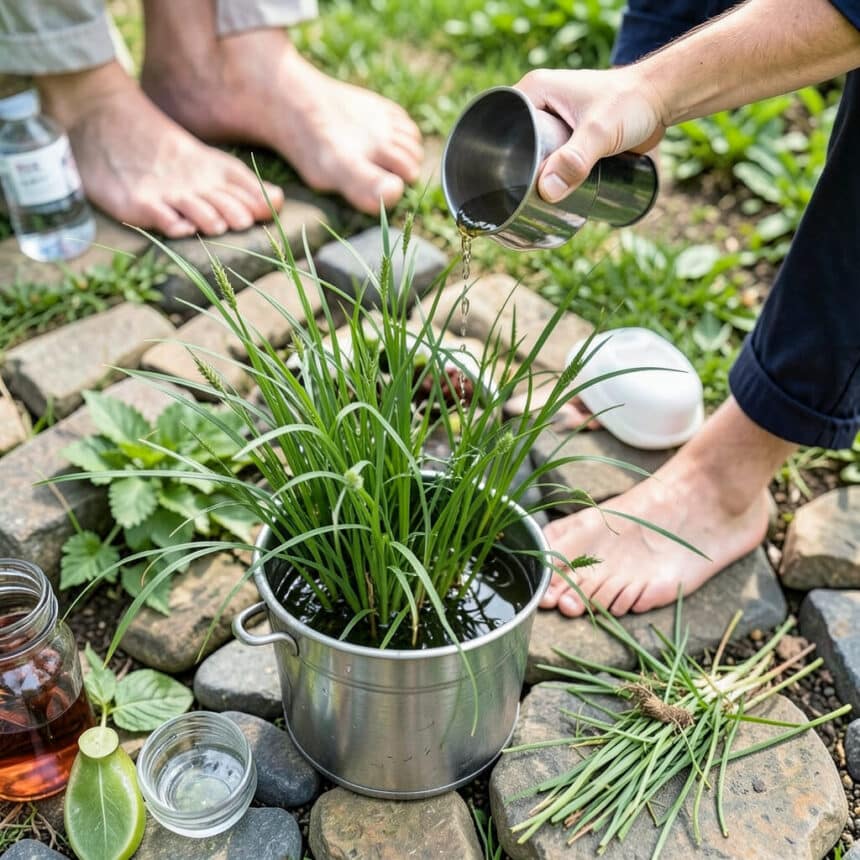
If you’re considering using sedge grass as a topical remedy, it’s crucial to understand proper preparation and application. The images show a process involving soaking the grass in water to create a liquid extract, which can then be applied to the skin or hair.
- Harvesting: Collect fresh, healthy Cyperus rotundus plants, ensuring they are free from pesticides or pollutants.
- Cleaning: Thoroughly wash the plant material to remove any dirt or debris.
- Preparation: The image shows the sedge grass soaking in a pot of water. This is a common method to create an infusion or decoction. You might chop the plant material before soaking or gently simmer it for a period to extract its beneficial compounds.
- Application for Hair: Once cooled and strained, the liquid can be used as a hair rinse. After shampooing, pour the sedge grass infusion over your hair and scalp, gently massaging it in. You can rinse it out or leave it in, depending on your preference and the desired effect.
- Application for Skin: For skin concerns, the strained liquid can be applied directly to the affected area using a clean cloth or cotton pad. For broader application, it can be added to bathwater. The image also depicts sedge grass placed directly on a foot, suggesting a direct application method for localized issues.
Important Considerations and Safety Notes
While natural remedies can be appealing, it’s essential to approach them with caution and awareness:
- Identification is Key: Ensure you correctly identify Cyperus rotundus. Misidentification could lead to using a plant that is ineffective or even harmful.
- Purity: Use sedge grass from clean, unpolluted environments, free from chemical sprays or heavy metals.
- Patch Test: Before applying to a large area of skin or your entire scalp, perform a patch test on a small, inconspicuous area to check for any allergic reactions or sensitivities.
- Consult a Professional: If you have underlying skin conditions, allergies, or are pregnant or breastfeeding, consult with a healthcare professional or dermatologist before using any new herbal remedy.
- Not a Cure: Sedge grass should not be considered a substitute for medical treatment for serious conditions. It may offer supportive benefits for general wellness and minor ailments.
- Internal Use: This article focuses on topical use. Internal consumption of herbal remedies should always be done under the guidance of a qualified herbalist or healthcare provider due to potential interactions or specific dosage requirements.
Frequently Asked Questions About Sedge Grass
Q: Is sedge grass the same as crabgrass?
A: No, while both are often considered weeds, sedge grass (Cyperus rotundus) is a distinct species from crabgrass (Digitaria species). They belong to different plant families, and their traditional uses differ.
Q: Can I use sedge grass for all skin types?
A: While generally considered mild, individual reactions can vary. Always perform a patch test first, especially if you have sensitive skin or known allergies.
Q: How often can I use sedge grass liquid on my hair?
A: The frequency depends on your hair type and needs. You can start by using it once or twice a week as a rinse and adjust based on how your hair and scalp respond.
Q: Where can I find sedge grass?
A: Sedge grass is a common perennial weed found in various climates worldwide, often in lawns, gardens, and agricultural fields. Ensure you harvest from areas free of contaminants.
Final Thoughts
The humble sedge grass, Cyperus rotundus, often overlooked or dismissed as a common weed, holds a fascinating array of potential topical health benefits. From its traditional uses in soothing skin to its possible role in promoting hair vitality, this resilient plant offers a natural pathway to wellness. While scientific research continues to explore its full potential, incorporating sedge grass into your topical routine, with proper identification and caution, could be a unique way to embrace natural remedies for skin and hair care. Always prioritize safety and consult with healthcare professionals for serious concerns.


